Physical ID:
An ID (identification document) is any physical or digital document that proves a person’s identity. Examples include passports, driver’s licenses, and national ID cards. A digital ID is an electronic version of a person’s identity, used for online identity verification and authentication.
- Definition: A document used to verify a person’s identity.
- Examples: Passports, driver’s licenses, state-issued ID cards, and national ID cards.
- Purpose: To prove a person’s identity in various situations, such as accessing services, traveling, or making purchases.
- Physical: Often physical, tangible documents like a passport or driver’s license.
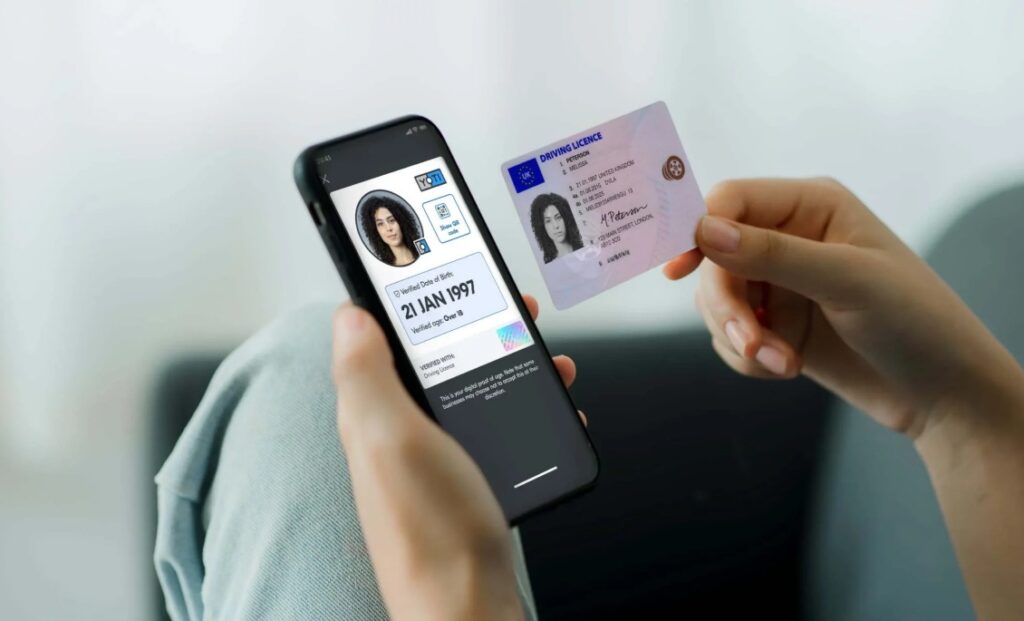
Digital ID:
A digital ID is an electronic representation of your identity, often used online to verify who you are. It allows you to prove your identity without needing to present a physical document like a passport or driver’s license. Digital IDs can be issued by governments, companies, or generated by individuals themselves.
- Electronic Verification:Digital IDs use secure methods to verify your identity online, like biometric data (fingerprints, facial scans) or other digital credentials.
- Reusability:Once established, a digital ID can be used repeatedly for different services and transactions, eliminating the need to provide the same information multiple times.
- Convenience:Digital IDs provide a convenient way to access online services without needing physical documents or going to a physical location.
- Security:Digital IDs are designed with security in mind, often using encryption and other technologies to protect your personal information.
- Examples:Digital IDs can be used for various purposes, including accessing online bank accounts, filing taxes online, or boarding flights.
- Control:Users often have control over what information is shared, allowing them to share only specific details needed for a transaction.